
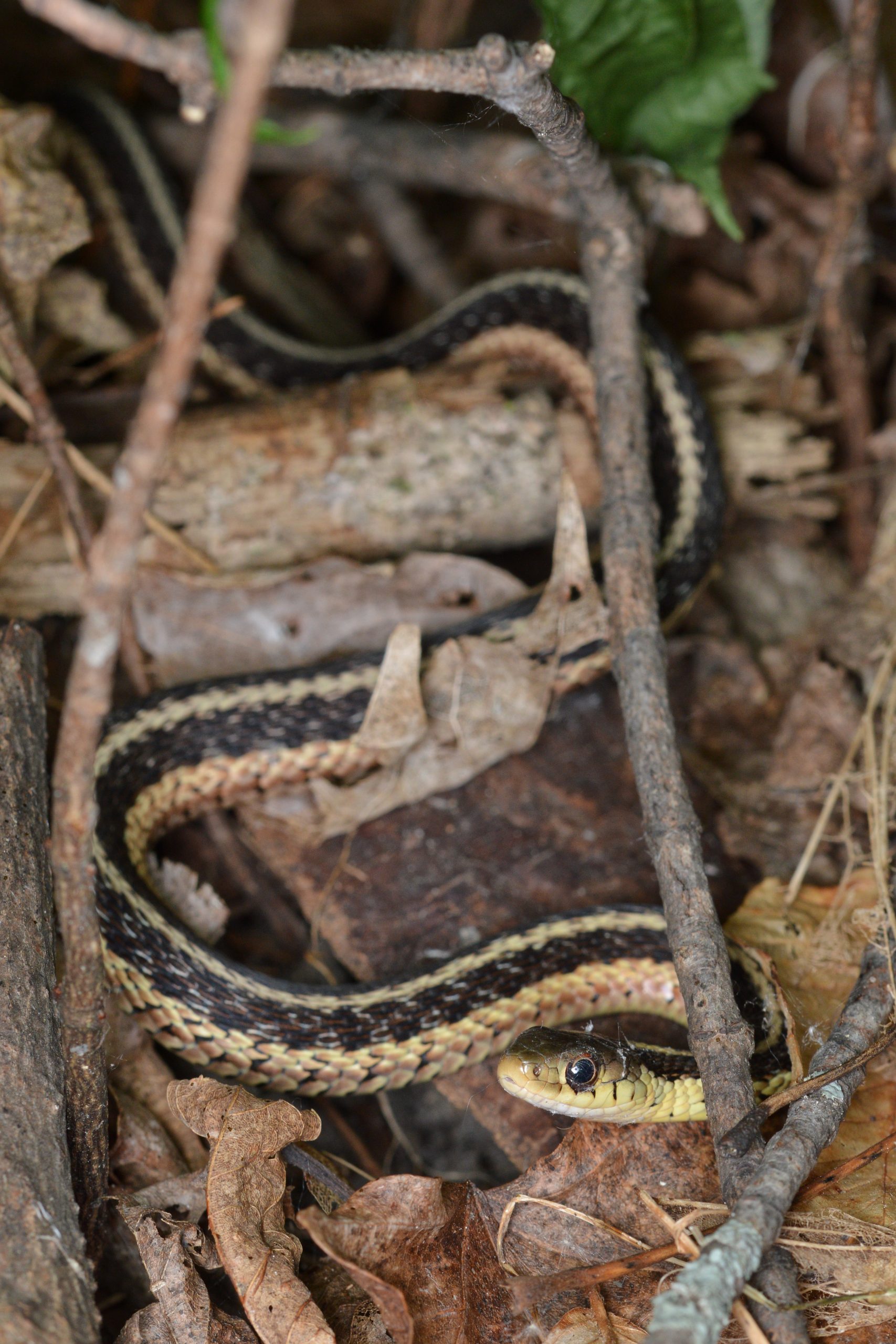
Garter snakes are those slim, quick little snakes you’re most likely to spot slipping through the grass in a backyard or along a pond edge almost anywhere in North America. As a group they cover roughly 35 species in the genus Thamnophis, and Britannica notes that they are nonvenomous North American snakes having a striped pattern suggesting a garter, typically one or three longitudinal yellow to red stripes between checkered blotches. Most are small to moderate in size, usually less than 39 inches long, and completely harmless to people even though a startled one may strike or let loose a smelly musk if it’s picked up.
What really sets garter snakes apart is how at home they are almost everywhere. They turn up in grasslands, forests, marshes, and ordinary suburban gardens, and they are remarkably adaptable with a wide geographic distribution spanning across most of North America, from Canada to Central America. Because they thrive close to people without causing any trouble, they’ve become one of the most commonly encountered snakes on the continent, and even a favorite starter pet for reptile keepers thanks to their manageable size and docile nature.
The garter snake’s story stretches back tens of millions of years. Scientists studying a newly described fossil snake species that lived 38 million years ago in what is now Wyoming found four individuals curled together in an ancient den, which paleontologist Michael Caldwell described by noting modern garter snakes are famous for gathering by the thousands to hibernate together in dens and burrows. That discovery suggests the group’s signature habit of piling up for winter is an ancient one, not something they picked up recently.
Today the genus Thamnophis is spread from Canada down into Central America, and the common garter snake in particular is considered probably North America’s most widely distributed reptile. Most of the roughly 35 recognized species are doing just fine, and the IUCN has assessed 31 species of garter snakes and classified most of these as species of least concern. A handful, though, have run into real trouble: the giant garter snake of California’s Central Valley is listed as vulnerable, largely because more than 90 percent of the suitable habitat for this species has been eliminated, while a couple of Mexican species are considered endangered.
One particular chapter of garter snake history plays out every spring in Manitoba, Canada, where the Narcisse Snake Dens hold a combined total of up to 100,000 hibernating individuals, making it the largest concentration of snakes in the world. That gathering, repeated year after year for generations, has turned an ordinary patch of prairie limestone into one of the most famous wildlife spectacles tied to any single species of snake.
Garter snakes are active, curious little hunters that rely on sight and smell rather than venom to make a living. They are opportunistic feeders, meaning they will eat whatever is readily available, and their diet primarily consists of earthworms, amphibians, fish, small mammals, and occasionally birds. Give one a whiff of prey and it will flick its tongue to pick up the scent before closing in, since these snakes use their excellent sense of smell and vision to hunt prey.
Around people, garter snakes are generally easygoing. They are generally harmless and non aggressive, and rarely bite unless provoked, though a cornered snake may release a foul-smelling musk and might puff up its body to appear larger. That mix of calm temperament and small size is exactly why so many keepers find them such rewarding, low-drama pets.
Socially, garter snakes are more interesting than most people expect from a solitary-seeming reptile. Come autumn, red-sided garter snakes travel to shared den sites and settle in together for months, and researchers have even found that Butler’s garter snakes show a complex social structure sorted by age and sex. Babies, on the other hand, are on their own from day one; they are independent at birth and don’t require further parental care, hunting small prey within days of being born.
Did you notice something that could be improved? Something wrong, or something you'd like to share, comment on, add, or remove? We'd really appreciate your help. Got general feedback or a complaint instead of a specific edit? Use our Contact Us page.
Log in to suggest an editSources: Britannica - https://www.britannica.com/animal/garter-snake · Reptiles Magazine - https://reptilesmagazine.com/garter-snake-care-sheet/ · Animals.net - https://animals.net/garter-snake/ · National Park Service (Acadia Fast Facts) - https://www.nps.gov/articles/000/garter-snake-fast-facts.htm · National Park Service (Golden Spike reptiles) - https://nps.gov/gosp/learn/nature/reptiles.htm · U.S. Fish & Wildlife Service - Giant Garter Snake - https://www.fws.gov/species/giant-garter-snake-thamnophis-gigas · Center for Biological Diversity - Giant Garter Snake - https://www.biologicaldiversity.org/species/reptiles/giant_garter_snake/natural_history.html · Wikipedia - Giant garter snake - https://en.wikipedia.org/wiki/Giant_garter_snake · Sci.News - Hibernophis breithaupti fossil - https://www.sci.news/paleontology/hibernophis-breithaupti-13121.html · Phys.org - New fossil snake species - https://phys.org/news/2024-07-fossil-snake-species-insight-reptile.html · Discover Wildlife - Narcisse Snake Dens - https://www.discoverwildlife.com/animal-facts/reptiles/biggest-snake-den · Forbes - Narcisse Snake Gathering - https://www.forbes.com/sites/scotttravers/2025/03/26/inside-the-worlds-largest-snake-gathering-why-over-75000-snakes-swarm-narcisse-every-year/ · iNaturalist - Thamnophis - https://www.inaturalist.org/taxa/28339-Thamnophis · PetMD - Garter Snake Care Sheet - https://www.petmd.com/reptile/garter-snake-care-sheet