
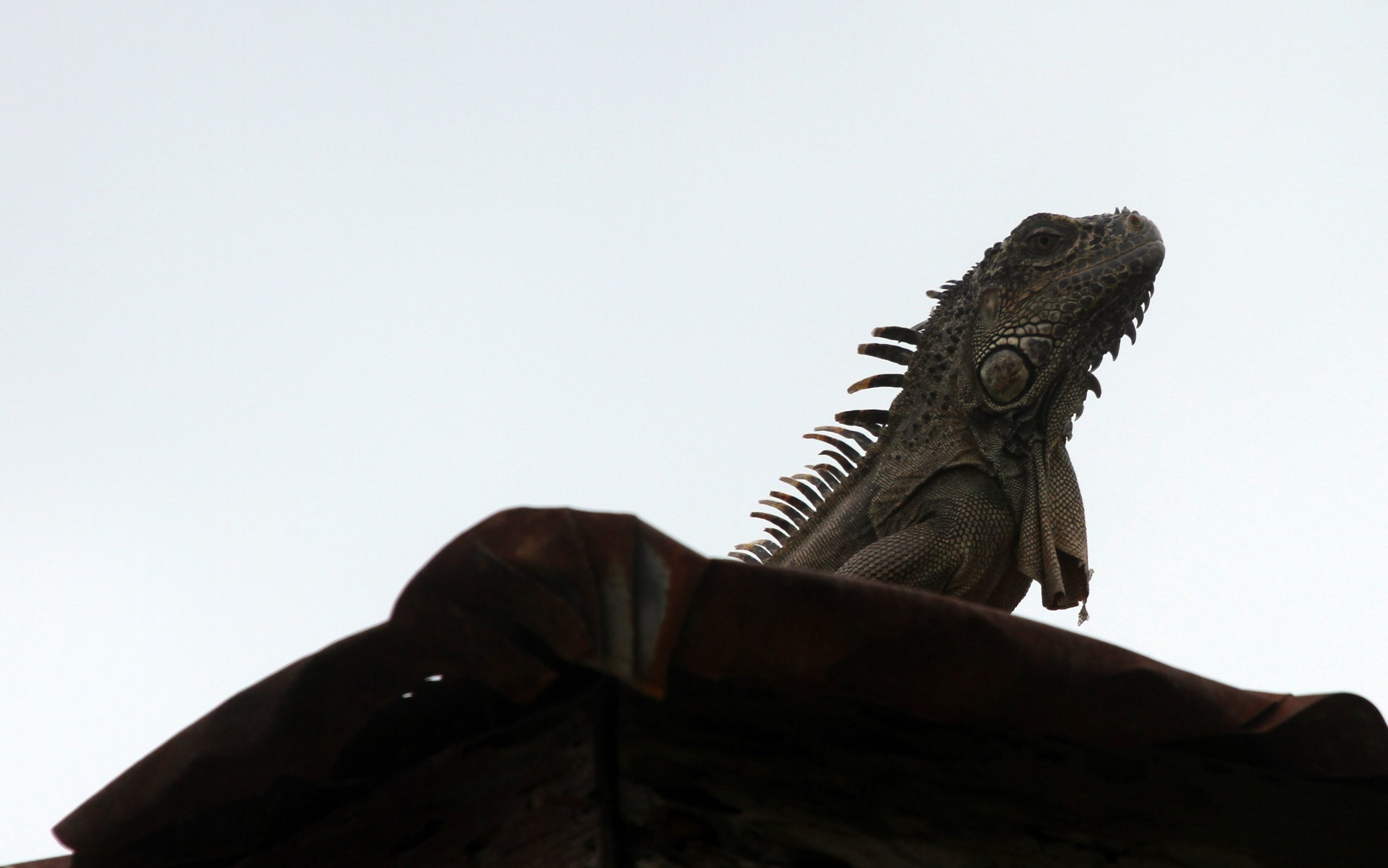
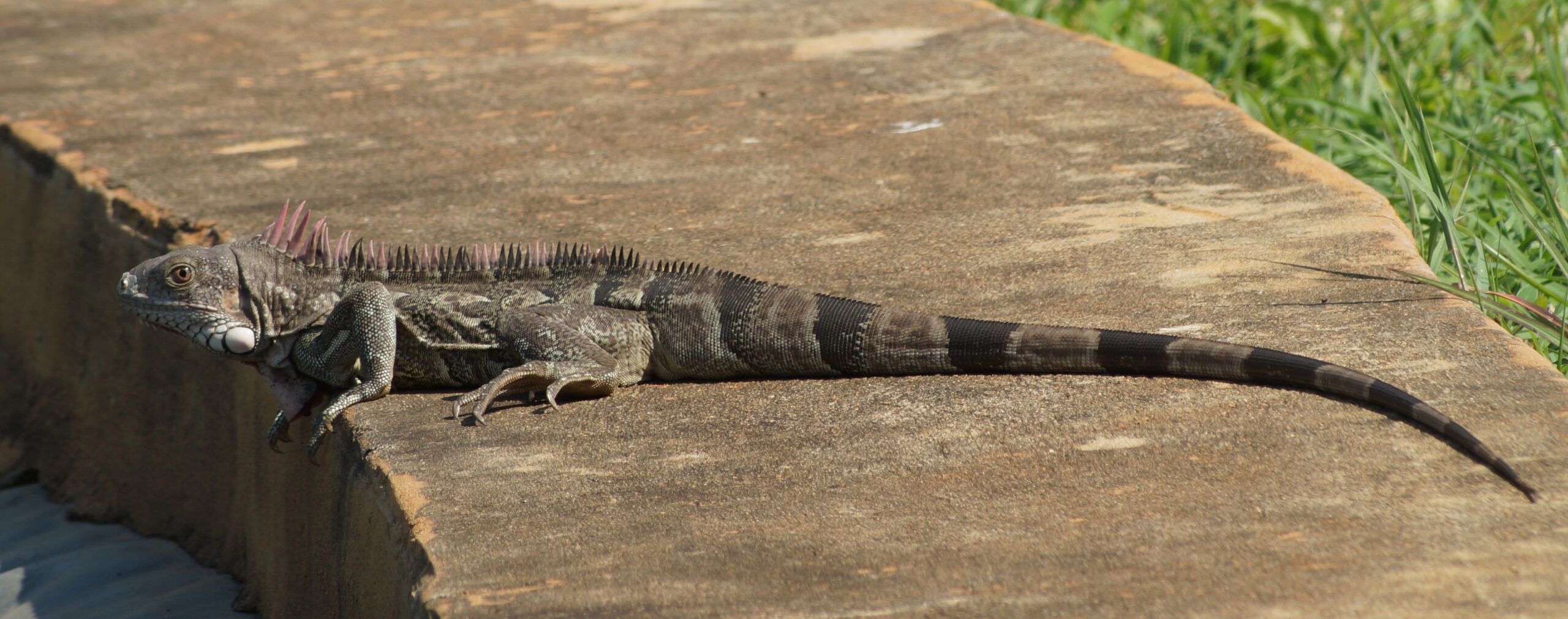
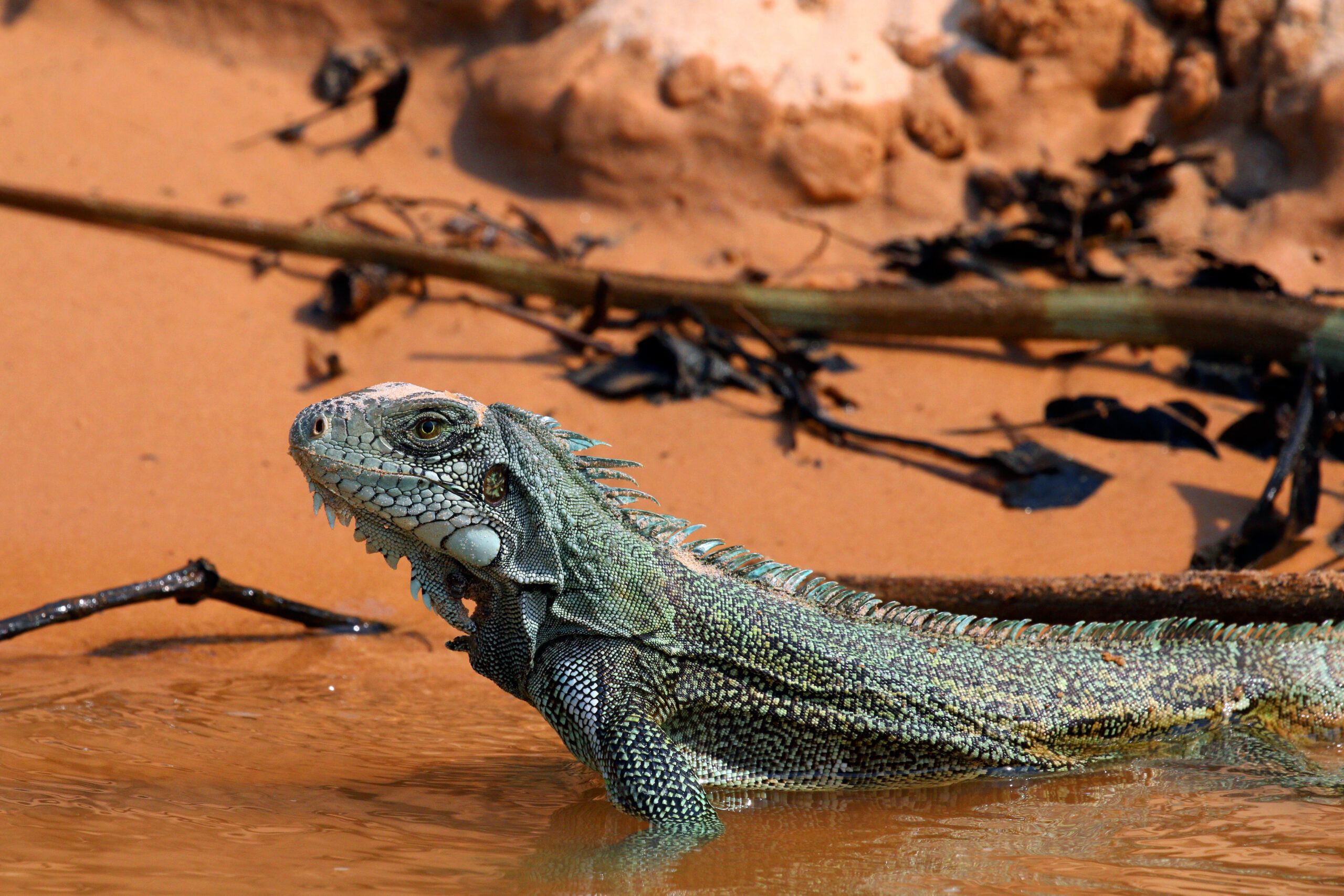
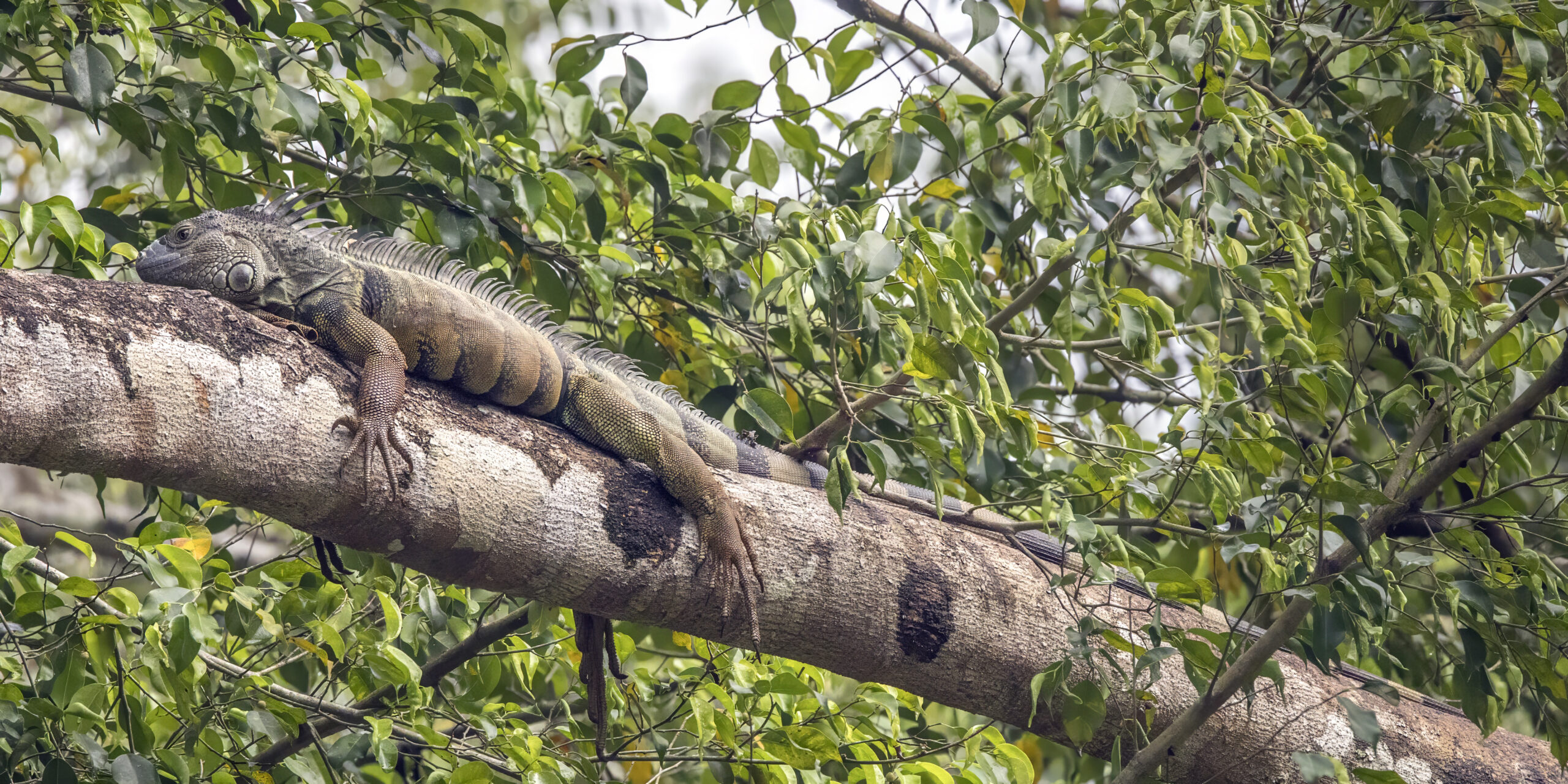
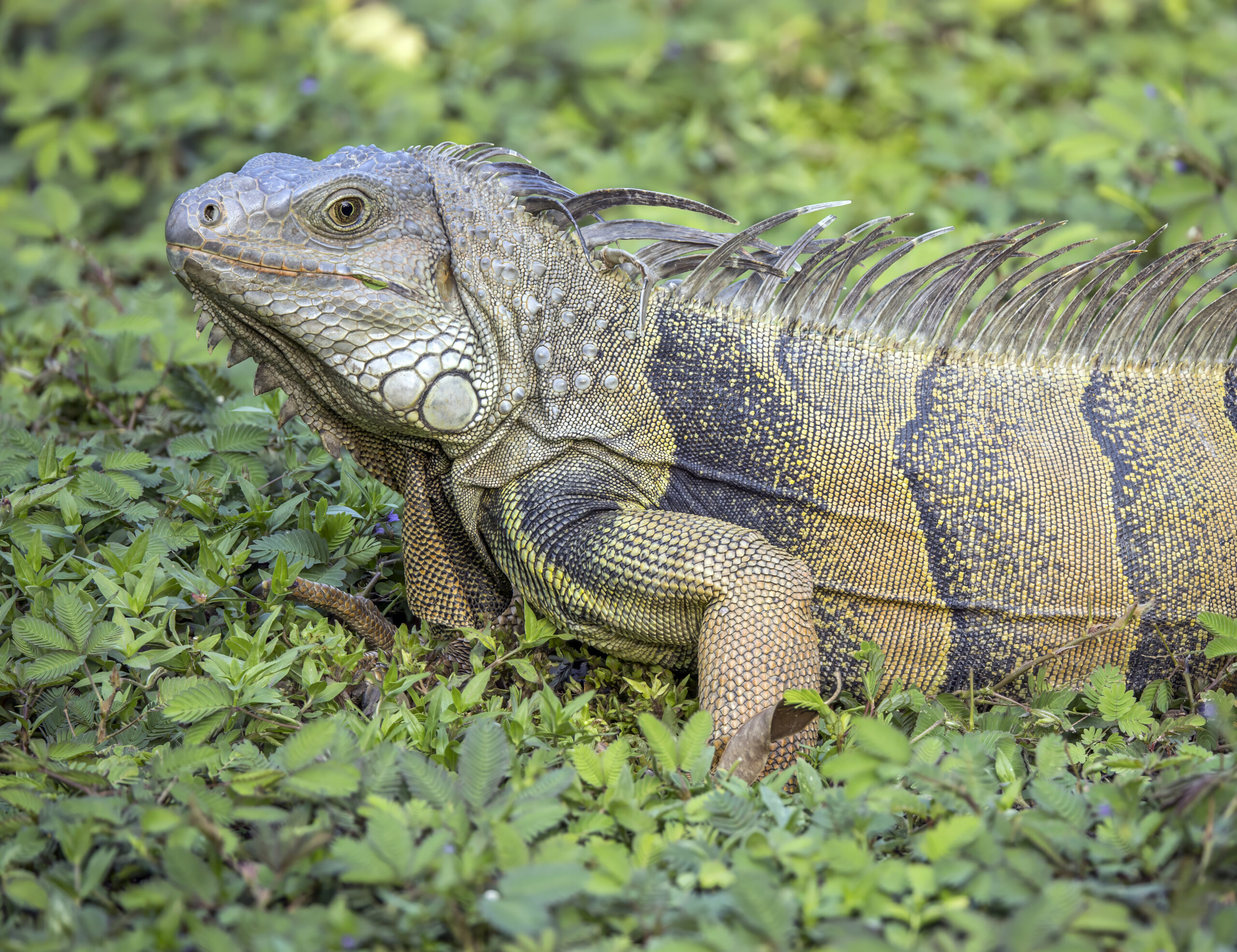
The green iguana is one of the largest lizards found anywhere in the Americas, and it definitely looks the part. National Geographic notes that these reptiles are among the largest lizards in the Americas, averaging around 6.5 feet long and weighing about 11 pounds, which is why so many people describe them as having a dinosaur-like appearance.
Despite the name, don’t expect every iguana to actually be green. Adults may vary in color, including green, gray, orange, or even bluish hues, depending on age, location, and mood, and hatchlings usually start out a bright, vivid green that can fade or shift as they mature.
A few features make this lizard instantly recognizable: a pendulous flap of skin under the throat, a row of spines that run along its back and tail, and a long tail that is thinner at the end. On top of all that, green iguanas even have a light-sensitive third eye on the top of their head that helps them notice shadows of approaching predators.
The green iguana was first formally described by the Swedish botanist Carl Linnaeus in 1758, and it has been part of scientific record ever since. Its natural home stretches across a huge swath of the Americas, from the rain forests of northern Mexico, Central America, the Caribbean Islands, and southern Brazil, where it has lived alongside humans for centuries.
Even its common name has deep roots — the word iguana comes from Spanish iguana which comes from Taino *iwana, the language of the Caribbean’s original inhabitants. For generations people in its native range have valued the iguana as a food source, and its meat and eggs have historically been eaten and are still prized in some places for their nutritional value.
The iguana’s more recent history in the United States tells a very different story. Iguanas were originally brought to Florida in the 1960’s through the pet trade, and by the 1980s the green iguana was top of the charts for the pet reptile trade, and as a result its population rocketed as escaped and released pets established thriving wild colonies in South Florida, Puerto Rico, Hawaii, and beyond.
In the wild, green iguanas are creatures of the treetops. They spend most of their lives in the canopy, descending only infrequently to mate, lay eggs, or change trees, which keeps them safely out of reach of many ground predators.
When it comes to food, iguanas are primarily herbivores, iguanas are active during the day, feeding on leaves, flowers, and fruit, though young iguanas often supplement their diet with insects and other small protein sources while they’re growing quickly.
These lizards have some seriously impressive survival tricks. When threatened by predators, they may leap from great heights into a waterbody and escape, and remarkably, they are tough enough to land on solid ground from as high as 40 feet and survive even if there’s no water below to cushion the fall. If cornered, an iguana will flare its dewlap, puff up its body, bob its head, and lash out with its powerful tail as a warning.
As pets, green iguanas can be surprisingly charming, and owners often say they have quirky personalities and are known to form lasting bonds with their owners. That said, these are large, powerful lizards that are prone to aggressive behavior, especially if they feel cornered or aren’t handled with patience, so they’re really best suited to experienced reptile keepers who understand their space and social needs.
Did you notice something that could be improved? Something wrong, or something you'd like to share, comment on, add, or remove? We'd really appreciate your help. Got general feedback or a complaint instead of a specific edit? Use our Contact Us page.
Log in to suggest an editSources: National Geographic - https://www.nationalgeographic.com/animals/reptiles/facts/green-iguana · Animal Kingdom - https://animalkingdom.org/species/green-iguana/ · Animal Database (Fandom) - https://animals.fandom.com/wiki/Green_Iguana · graphsearch EPFL - https://graphsearch.epfl.ch/en/concept/42814957 · The Nature Conservancy Cool Green Science - https://blog.nature.org/2019/09/10/the-iguana-invasion/ · Humane World for Animals - https://www.humaneworld.org/en/blog/floridas-inhumane-solution-its-iguana · Anywhere Travel - https://www.anywhere.com/flora-fauna/reptile/green-iguana · ReptileDirect - https://reptiledirect.com/green-iguana/ · Arbor View Animal Hospital (Catherine Love, DVM) - https://arborviewah.com/wp-content/uploads/2021/04/Green-Iguana.pdf · AnimalSpot - https://www.animalspot.net/green-iguana.html · ScienceDirect Topics - https://www.sciencedirect.com/topics/veterinary-science-and-veterinary-medicine/parietal-eye