
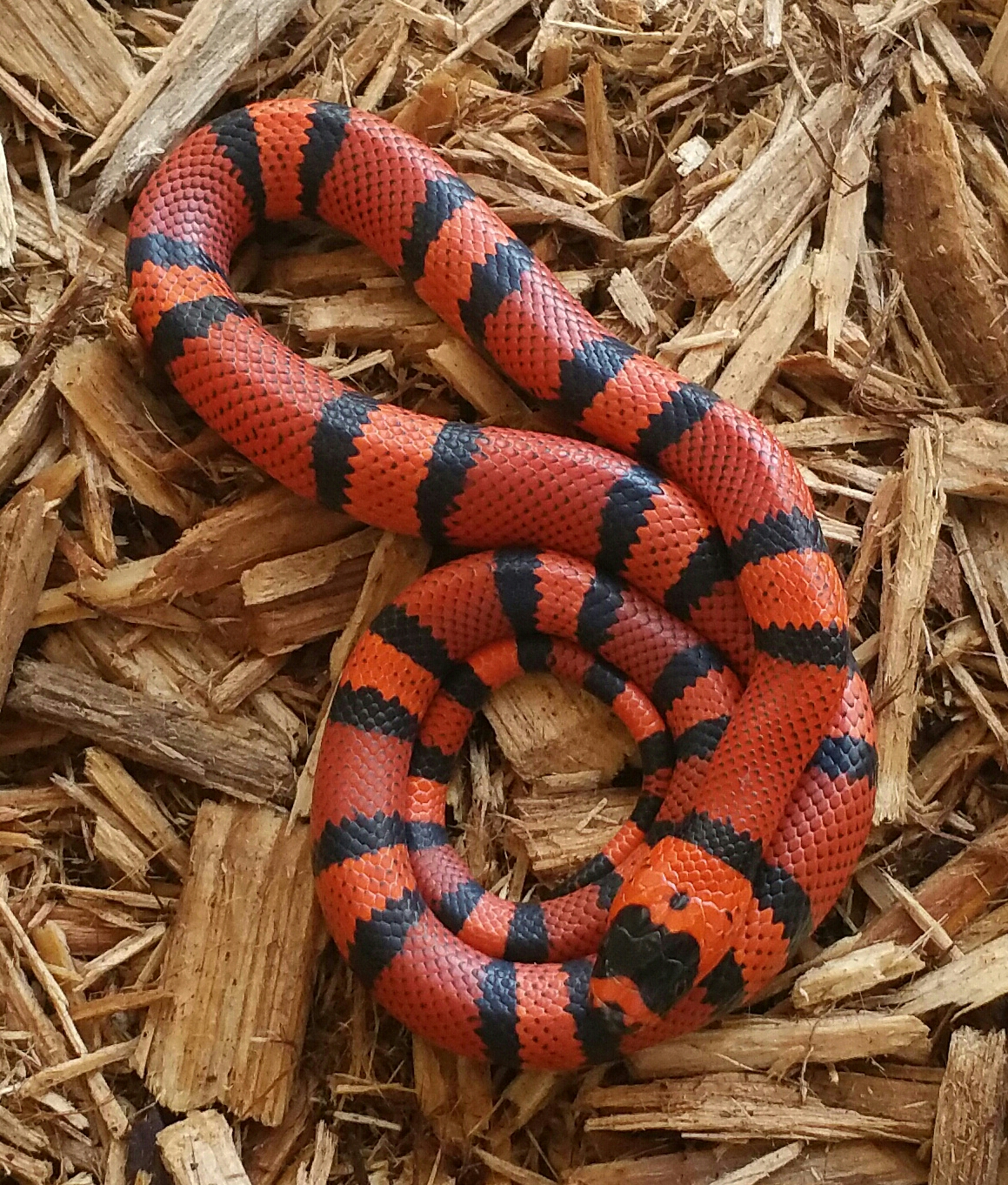
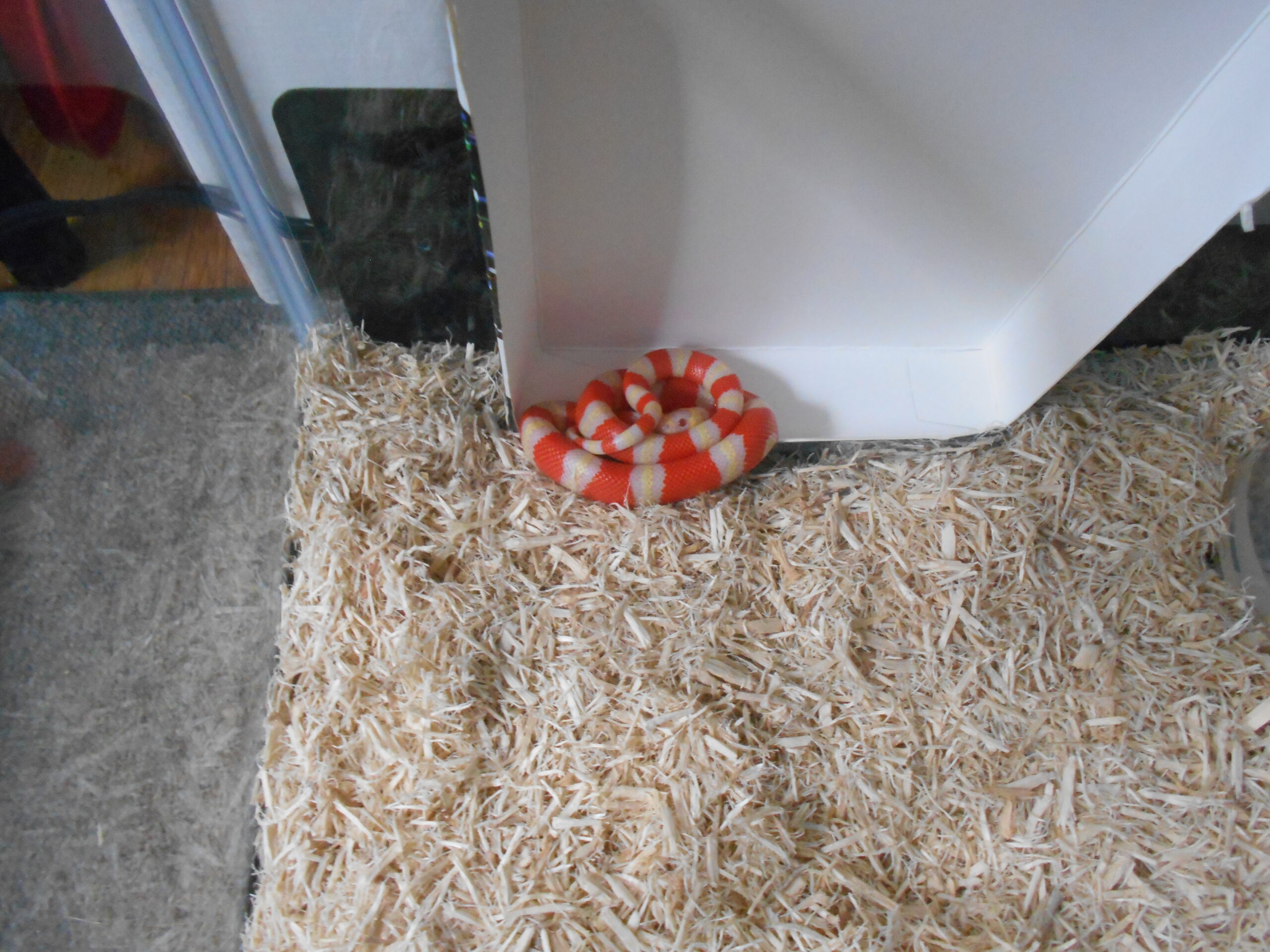
The Honduran Milk Snake is one of the true showstoppers of the reptile world, wrapped in bold bands of red, black, and yellow or orange that make it look like it belongs in a jungle mural. It is one of the larger subspecies of milk snake, attaining a length of 48 inches in the wild and some captive specimens reaching a length of 5 feet. Despite the striking looks, this snake is completely harmless to people, since these bright colours are designed to deter predators and mimic deadly snakes, but Honduran Milk Snakes have no venom and are completely harmless to humans.
Build-wise it’s a fairly light, streamlined animal rather than a heavy-bodied one. The Honduran Milk Snake is a fairly large colubrid, although it’s not weighty at all, it is an active snake that will explore and enjoy a large environment. Honduran milksnakes are known for their distinctive, attractive appearance: oval head, round pupils, slender body, and smooth, glossy scales.
It’s become a favorite in American households for good reason. Honduran milksnakes are some of the most popular pet snakes in the US due to their docile temperaments, hardiness, and attractive coloring. Add to that a genuinely long lifespan and manageable care needs, and it’s easy to see why this snake has such a devoted fan base among keepers of all experience levels.
This snake’s story starts in the humid lowlands of Central America. The Honduran milk snake inhabits low to medium elevations of the tropical areas of Honduras, Nicaragua, and Northeastern Costa Rica. Honduran milksnakes are terrestrial snakes found primarily on the Caribbean half of Honduras, Nicaragua, and a little bit of Costa Rica, and their preferred habitat is moist broadleaf forest, also known as tropical rainforest.
Scientifically, the subspecies is a relatively recent addition to the books. Lampropeltis triangulum hondurensis, commonly known as the Honduran milk snake, is an egg-laying subspecies of nonvenomous colubrid snake, first formally described by herpetologist Kenneth L. Williams in 1978. Its name is a straightforward nod to geography: its subspecific name hondurensis is a Latinization of their primary country of origin: Honduras.
The whole milk snake group has an odd nickname with folklore roots. They get their name from an old belief that it drinks milk from the udders of cows. That tale isn’t true, but it stuck. Meanwhile, reptile breeders really took to this particular subspecies starting in the 1990s. In 1994, the reptile trade was just starting to explode with captive breeding and the onset of color mutations, and Hondurans quickly became one of the trade’s flagship snakes, prized for how readily they reproduce and how many color morphs they can produce.
Today it is one of the more commonly bred milk snakes in captivity and is one of the larger milk snakes, reaching a length of 5 feet. It even made unusual headlines once: a famously rare two-headed albino specimen named Medusa, a three-foot-long, 4-year-old two-headed Honduran Milk snake born in Florida, was purchased for a jaw-dropping sum and put on public display, drawing worldwide media attention to the subspecies.
Honduran Milk Snakes are famous for being easygoing, which is a big reason they’re so popular with first-time snake owners. Honduran milk snakes adapt well to captivity due to their relative ease of care and docile nature, and their moderate size and brilliant colors make them impressive and attractive pets. Young snakes can be a bit shy, but Honduran Milk Snakes may bite if they feel threatened, but they are not venomous, and bites are harmless and reduce with consistent, gentle handling over time.
In the wild, this species hunts by stealth and muscle rather than venom. The Honduran milk snake uses constriction to kill its prey and tends to be opportunistic when it comes to its diet; they eat other snakes, including venomous snakes, lizards, rodents, birds and eggs, and in captivity they are kept successfully on a diet of mice and rats. That coral-snake-mimicking pattern isn’t just for show, either. Milksnakes use quick, jerky movements so that their bands flash, startling predators, and their bright colors signal danger and often confuse predators, making these snakes hard to follow.
Because of their taste for other snakes, they can never share a home with a companion. Like all king snakes and milk snakes, they must be housed alone, apart from the breeding season, because they are cannibalistic. Sources differ a bit on daily activity patterns, with some describing them as nocturnal or crepuscular and others noting daytime activity, but most agree these snakes spend a good deal of time tucked away and secretive, only becoming visibly active around feeding time or when exploring a roomy enclosure.
Did you notice something that could be improved? Something wrong, or something you'd like to share, comment on, add, or remove? We'd really appreciate your help. Got general feedback or a complaint instead of a specific edit? Use our Contact Us page.
Log in to suggest an editSources: Wikipedia - https://en.wikipedia.org/wiki/Honduran_milk_snake · SeaWorld/United Parks & Resorts - https://seaworld.org/animals/facts/reptiles/honduran-milksnake/ · The Bio Dude Care Sheet - https://www.thebiodude.com/blogs/snake-caresheets/honduran-milksnake-lampropeltis-triangulum-hondurensis-care-sheet · Reptile Cymru Care Guide - https://www.reptilecymru.co.uk/honduran-milk-snake-care-guide/ · Reptiles Magazine - https://reptilesmagazine.com/honduran-milk-snake-care-and-breeding/ · UPI - https://www.upi.com/Odd_News/2015/09/05/Two-headed-albino-snake-bought-by-Venice-Beach-Freakshow-owner/5851441454201/ · Guinness World Records - https://www.guinnessworldrecords.com/world-records/largest-collection-of-two-headed-animals- · Reptile Centre Care & Feeding Guide - https://www.reptilecentre.com/pages/info-honduran-milk-snake-care-sheet · Photo: Rod Galloway Jr - https://commons.wikimedia.org/wiki/File:Honduran_milk_snake.jpg (CC BY-SA 4.0) · Photo: Old Time Music Fan - https://commons.wikimedia.org/wiki/File:Albino_Honduran_Milk_Snake.jpg (CC BY-SA 3.0)