
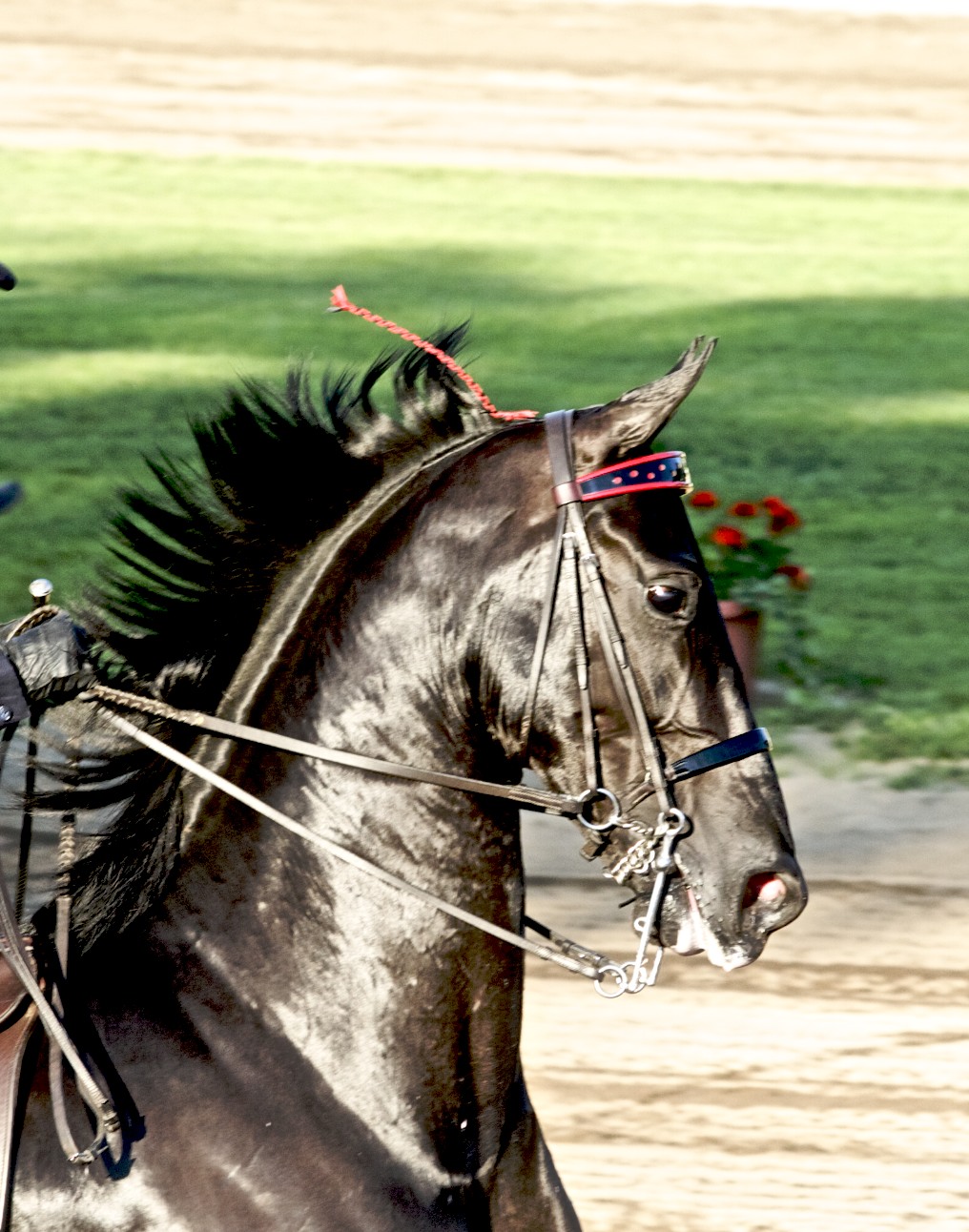
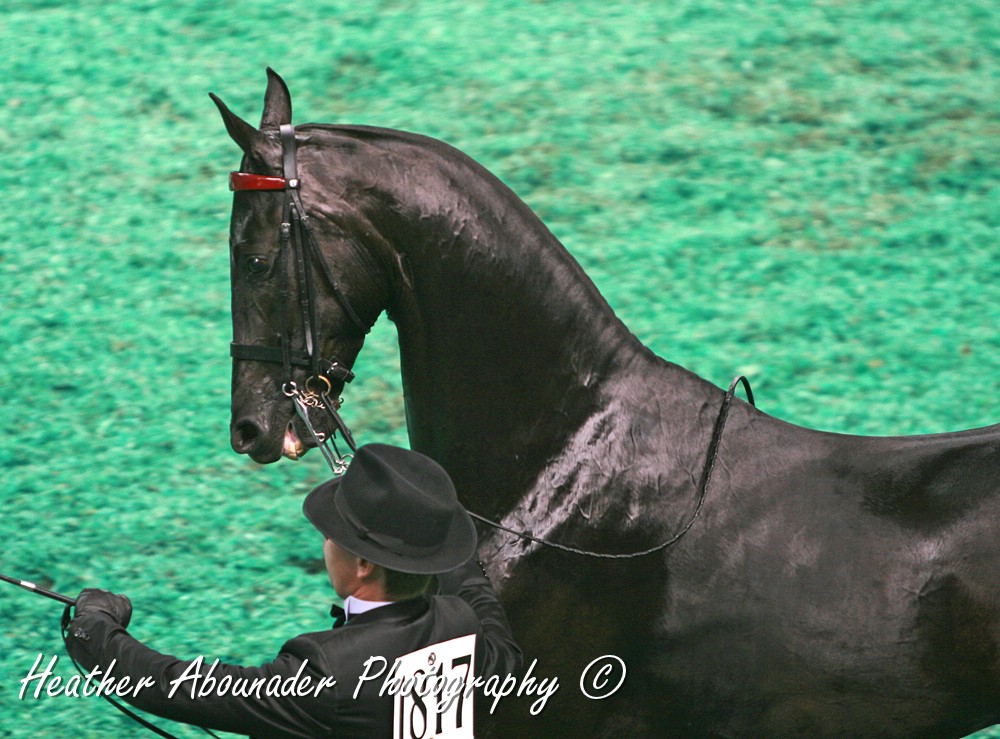
If you’ve ever seen a horse in a show ring with its head held sky-high, tail flagged like a banner, and legs snapping up in an eye-catching trot, there’s a good chance you were looking at an American Saddlebred. Often nicknamed the “Peacock of the Horse World,” this breed is famous for its animated, high-stepping movement, long arched neck, and an overall look of pride and presence that’s hard to miss.
Saddlebreds typically stand about 15 to 16 hands tall and come in just about every color imaginable, from bay, black, and chestnut to palomino and flashy pinto patterns. Beyond looks, the real party trick of this breed is its gaits: many Saddlebreds can perform not just the usual walk, trot, and canter, but two extra smooth, ambling gaits called the slow gait and the rack, earning them the title of “five-gaited” horses.
Just as important as their beauty is their brain. These horses are famously smart, willing, and people-focused, which is part of why they’ve become one of America’s favorite show and pleasure riding breeds.
The Saddlebred’s story starts long before the breed had its modern name. Colonial settlers brought over ambling British horses, and these were bred in New England into a now-extinct breed called the Narragansett Pacer, prized for a smooth, ground-covering gait. When Thoroughbreds arrived in the colonies in the early 1700s, breeders crossed them with the Pacers to add size, speed, and refinement while keeping that comfortable ride.
This new type of horse followed pioneers through the Cumberland Gap into Kentucky, where it earned the nickname “Kentucky Saddler.” Kentucky horsemen kept refining the breed with more Thoroughbred, and later Morgan and Standardbred, blood, shaping an all-purpose horse valued for stamina, good looks, and an easy way of going.
The breed proved its worth as a mount for high-ranking officers on both sides of the Civil War, and after the war, demand for these horses as elegant pleasure and show mounts exploded. That popularity led to the founding of the American Saddlebred Horse Association (originally the American Saddle Horse Breeders’ Association) in Louisville, Kentucky in 1891, the very first breed registry created for an American horse breed.
Since then, the breed has only grown in reputation, with Saddlebreds now found across the United States and in countries such as Great Britain, South Africa, and Australia, still shining brightest in the show ring where their eye-catching movement was always meant to be seen.
Despite their showy, larger-than-life presence in the ring, American Saddlebreds are known for having a genuinely sweet, people-oriented personality. Owners often describe them as curious, alert, and eager to please, always seeming to enjoy the company of the humans around them.
They’re smart and quick learners, which makes training rewarding, though their intelligence and sensitivity mean they do best with a rider who understands how to communicate clearly rather than someone brand new to horses. That said, many Saddlebreds are calm and patient enough to make wonderful partners for amateurs, older riders, and even kids once they’ve had some basic experience.
Outside the show ring, this breed’s versatility really shines. Saddlebreds today are equally happy in saddle seat competition, dressage, jumping, driving, or just heading out for a relaxed trail ride, proving there’s a lot more to this elegant horse than just a pretty trot.
Did you notice something that could be improved? Something wrong, or something you'd like to share, comment on, add, or remove? We'd really appreciate your help. Got general feedback or a complaint instead of a specific edit? Use our Contact Us page.
Log in to suggest an editSources: American Saddlebred Horse and Breeders Association - https://www.saddlebred.com/aboutthebreed · American Saddlebred Horse and Breeders Association - History - https://www.saddlebred.com/american-saddlebred/history-1 · Wikipedia - American Saddlebred - https://en.wikipedia.org/wiki/American_Saddlebred · Wikipedia - Saddlebred - https://en.wikipedia.org/wiki/Saddlebred · Wikipedia - American Saddlebred Horse and Breeders Association - https://en.wikipedia.org/wiki/American_Saddlebred_Horse_and_Breeders_Association · Wikipedia - Narragansett Pacer - https://en.wikipedia.org/wiki/Narragansett_Pacer · Wikipedia - Five-gaited - https://en.wikipedia.org/wiki/Five-gaited · Britannica - American Saddlebred horse - https://www.britannica.com/animal/American-Saddlebred-horse · Mad Barn - American Saddlebred Horse Breed Guide - https://madbarn.com/american-saddlebred-horse-breed-profile/ · Chastain Veterinary Medical Group - The American Saddlebred Horse - https://www.chastainvets.info/services/equine/breeds/american-saddlebred-horse · Photo: Jean - https://commons.wikimedia.org/wiki/File:American_Saddlebred_3.jpg (CC BY 2.0) · Photo: Heather Moreton from Louisville, KY, USA - https://commons.wikimedia.org/wiki/File:A_Beautiful_Black_American_Saddlebred_Horse_(2994996839).jpg (CC BY 2.0) · Photo: A. G. Rosales - https://www.pexels.com/photo/chestnut-quarter-horse-28245389/ (Pexels License) · Photo: Erwin Bosman - https://www.pexels.com/photo/gentle-interaction-between-bay-and-palomino-horses-38128748/ (Pexels License) · Photo: A. G. Rosales - https://www.pexels.com/photo/brown-horse-grazing-in-priceville-field-28606907/ (Pexels License) · Photo: Barnabas Davoti - https://www.pexels.com/photo/brown-foal-with-roan-horse-in-norwegian-meadow-33077215/ (Pexels License)