
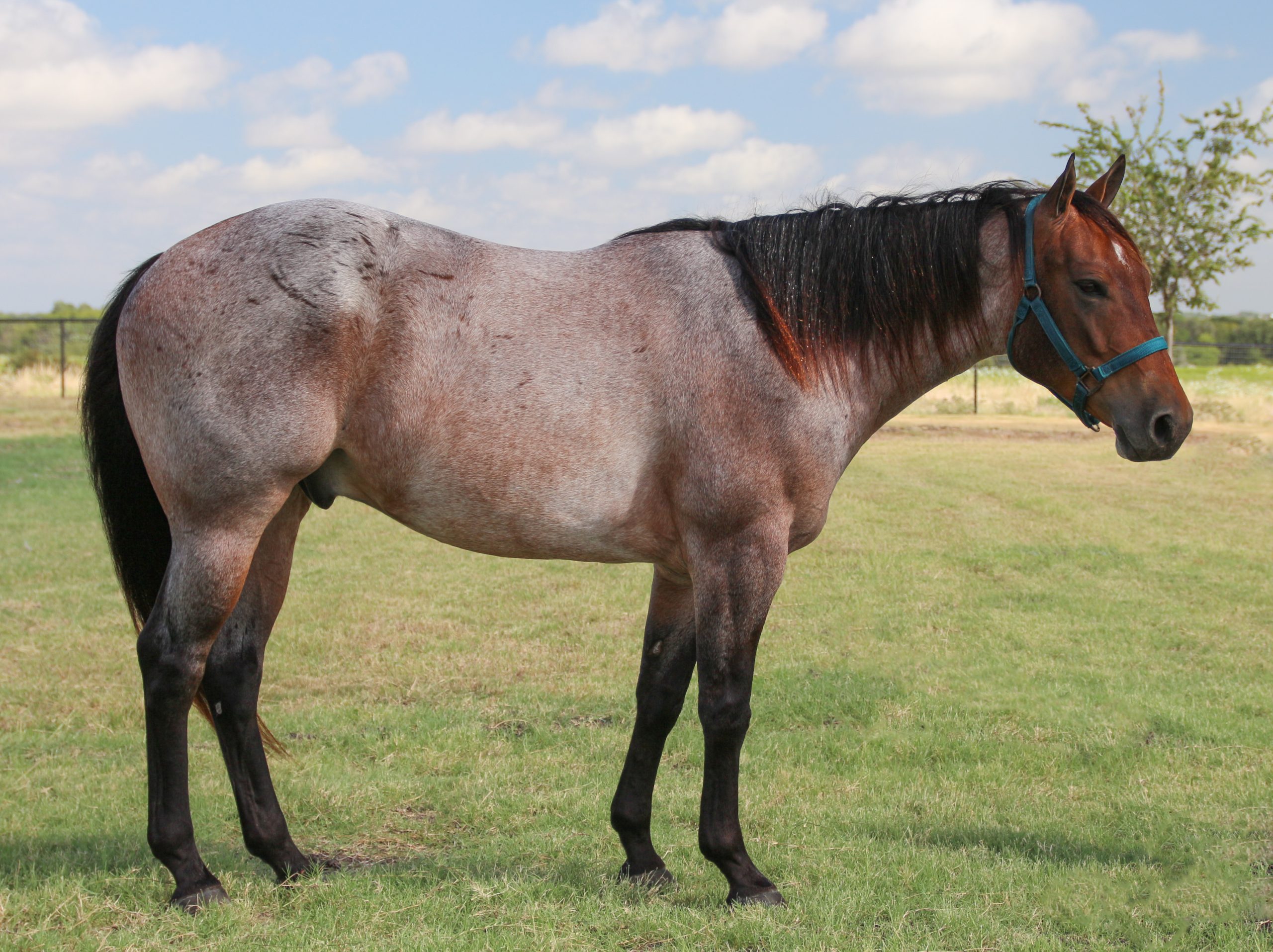
If you picture a classic American horse in your mind, chances are you are picturing an American Quarter Horse. This breed is famous for its compact, muscular build with a broad chest and powerful, rounded hindquarters, plus a short, refined head that gives it an alert, intelligent look. It is a true all-rounder, equally happy sprinting down a track, working cattle on a ranch, or carrying a nervous first-time rider around a lesson arena.
What really sets the Quarter Horse apart is speed over a short burst: it earned its name because it can outrun almost any other breed in a quarter-mile dash, with some individuals clocked at up to 44 mph. Add to that a famously easygoing, willing personality, and you get a horse that has become the most popular breed in the world, with the American Quarter Horse Association registering more than 6 million horses since 1940.
Color-wise, this is one of the most visually varied breeds around. Quarter Horses come in seventeen AQHA-recognized coat colors, including the classic reddish sorrel and bay along with roan, dun, buckskin, gray, grullo, palomino, cremello, and more, often with white markings on the face and legs.
The story of the Quarter Horse actually starts long before Texas cowboys and cattle drives. Its roots trace back to Colonial America, when settlers began crossing their hardy English work horses with fast Chickasaw horses descended from Spanish Barbs brought over by early Spanish explorers. Colonists loved racing these compact, muscular horses down the short main streets of their villages, which is exactly where the breed got its name.
One of the most influential early horses was a Texas stallion named Steel Dust, foaled in Kentucky in 1844, whose descendants became known for their heavy muscling, small ears, and lightning speed over short distances. As ranching spread west, these same qualities made the breed indispensable for working cattle, and its combination of quickness, cow sense, and a naturally cooperative attitude became its calling card.
The breed’s modern era began on March 15, 1940, when about 75 breeders and owners gathered in Fort Worth, Texas, to formally establish the American Quarter Horse Association. The very first horse registered, given the number P-1, was a stallion named Wimpy, a descendant of the King Ranch foundation sire Old Sorrel. Since then, the AQHA has grown into the largest equine breed registry in the world, and the American Quarter Horse has even lived at the White House, after being gifted to President Dwight Eisenhower in 1956.
Today the breed has earned official recognition beyond the show ring too. It has been named the official state horse of both Texas and Oklahoma, cementing its place as a true symbol of the American West.
Ask anyone who has spent time around Quarter Horses and they will tell you the same thing: this breed has one of the calmest, most cooperative temperaments in the horse world. They are known for being willing, trainable, and dependable, which is a big part of why they are such a popular choice for riders who are just starting out.
That steady nature comes from generations of work as reliable ranch horses, where a flighty or reactive mount simply would not do. Quarter Horses tend to be practical, sensible partners, though as with any breed, individual personality can vary depending on bloodlines, training, and how a particular horse is raised and handled.
Despite their easygoing attitude, these are not lazy horses. They still love to run, and giving them the chance to sprint and move every day keeps them happy, physically fit, and mentally satisfied. Their versatility means the same horse might spend one afternoon cutting cattle and the next carrying a child safely around a show ring.
Because of this dependable, people-oriented disposition, Quarter Horses are frequently used in equine-assisted therapy programs and classes for riders with disabilities, proving that their gentle side is just as real as their athletic one.
Did you notice something that could be improved? Something wrong, or something you'd like to share, comment on, add, or remove? We'd really appreciate your help. Got general feedback or a complaint instead of a specific edit? Use our Contact Us page.
Log in to suggest an editSources: AQHA - History of AQHA - https://www.aqha.com/history-of-aqha · AQHA - What Is a Quarter Horse? - https://www.aqha.com/-/what-is-a-quarter-horse · AQHA - About AQHA Overview - https://www.aqha.com/about-aqha-overview · AQHA - The History of the American Quarter Horse Breed - https://www.aqha.com/history-of-the-quarter-horse · Britannica - American Quarter Horse - https://www.britannica.com/animal/American-Quarter-Horse · Wikipedia - American Quarter Horse - https://en.wikipedia.org/wiki/American_Quarter_Horse · Wikipedia - American Quarter Horse Association - https://en.wikipedia.org/wiki/American_Quarter_Horse_Association · Wikipedia - Wimpy P-1 - https://en.wikipedia.org/wiki/Wimpy_P-1 · Wikipedia - List of U.S. state horses - https://en.wikipedia.org/wiki/List_of_U.S._state_horses · PetMD - American Quarter Horse - https://www.petmd.com/horse/breeds/american-quarter-horse · Mad Barn - American Quarter Horse Breed Characteristics - https://madbarn.com/american-quarter-horse-breed/ · My New Horse (Equus Magazine) - Getting to Know the American Quarter Horse - https://mynewhorse.equusmagazine.com/2024/03/19/getting-to-know-the-american-quarter-horse/ · AQHA - 10 Random Facts You Didn't Know About AQHA - https://www.aqha.com/-/10-random-facts-you-didn-t-know-about-aqha