
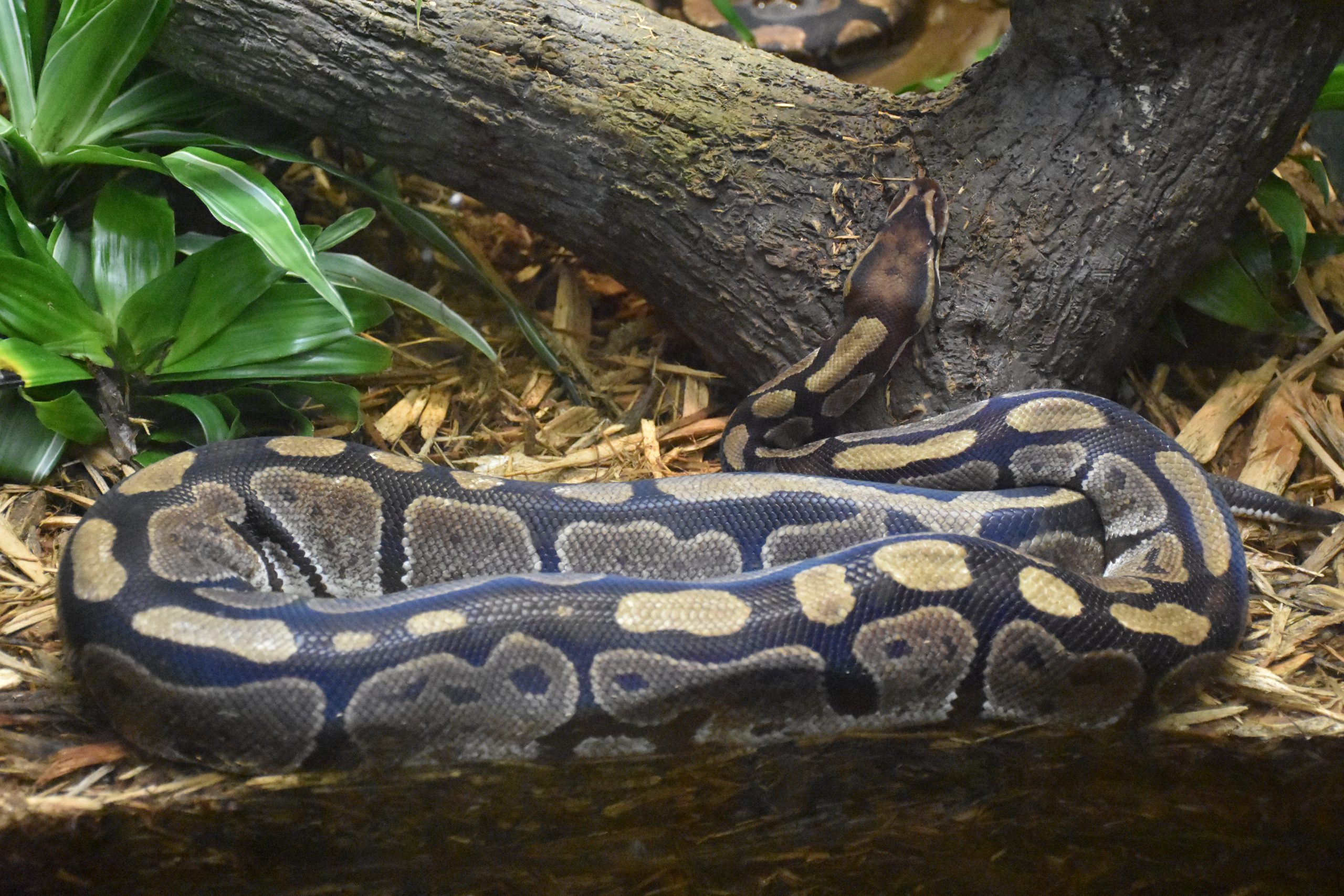
The Ball Python (Python regius) is a small, thick-bodied snake that has become one of the most beloved pet reptiles in the world. It gets its common name from its signature move: when it feels nervous or threatened, it tucks its head into the center of its coils and rolls itself into a neat, tight ball rather than trying to bite or flee.
This gentle giant of the beginner-snake world is actually the smallest python native to Africa, and it is completely harmless to people since it kills its prey by constriction rather than venom. In the wild its coloring is a handsome brown-to-black background dotted with tan or gold blotches, but decades of selective breeding have produced an incredible rainbow of color and pattern variations known as morphs, so no two pet ball pythons ever look quite the same.
With good care, these snakes are true long-term companions. They commonly live two to three decades in captivity, and some documented individuals have lived even longer, making a ball python less like a passing pet and more like a lifelong family member.
Ball pythons are native to the grasslands, savannas, and open woodlands of West and Central Africa, ranging from Senegal all the way across to Uganda, with especially dense populations in countries like Ghana, Benin, Togo, and Nigeria. Long before they became popular pets, these snakes held deep cultural meaning in parts of their homeland, where certain communities considered them sacred earth-symbols and it was taboo to harm one.
The snake actually carries two names on two continents. In Europe it is usually called the “royal python,” a nod to old legends about African royalty valuing the snake, while in the United States the label “ball python” stuck, coined by the pet trade in the 1970s to describe its famous defensive curling habit. Early imports in the 1970s and 80s were mostly wild-caught adults, prized for being cheap, calm, and easy to handle, but breeders at the time struggled to get them reproducing reliably in captivity.
Everything changed in 1992, when the very first captive-bred albino ball python went on sale. That single animal ignited a genetics craze, and breeders soon began developing thousands of new color and pattern combinations. What had once been an overlooked bargain snake quickly became one of the biggest stars of the modern reptile-keeping hobby.
Ball pythons are quiet, mostly nocturnal animals that spend their days tucked away in burrows or other hiding spots and become active after dark to search for food. They are solitary by nature and don’t seek out company, but they are famous for being remarkably calm and non-aggressive toward people, which is exactly why they’re recommended so often to first-time snake owners.
When startled, a ball python’s go-to response is almost always to curl into its trademark ball rather than strike, and genuine bites from this species are considered rare. In the wild they hunt by patiently waiting near rodent burrows for prey to wander by, and because of a naturally slow metabolism they may go a few weeks between meals, a trait that carries over into captivity where they’re typically fed on a relaxed, infrequent schedule.
As pets, ball pythons don’t need constant interaction to be happy, and many keepers describe them as low-key, easygoing animals that tolerate gentle, regular handling once they settle into their enclosure. Their unhurried, low-energy lifestyle is part of the appeal, offering a calm, undemanding kind of companionship rather than the constant activity you’d expect from a more social pet.
Did you notice something that could be improved? Something wrong, or something you'd like to share, comment on, add, or remove? We'd really appreciate your help. Got general feedback or a complaint instead of a specific edit? Use our Contact Us page.
Log in to suggest an editSources: Utica Zoo - https://www.uticazoo.org/ballpython/ · Animal Diversity Web - https://animaldiversity.org/accounts/Python_regius/ · Oakland Zoo - https://www.oaklandzoo.org/animals/ball-royal-python · Sacramento Zoo - https://www.saczoo.org/ball-python · A-Z Animals - https://a-z-animals.com/animals/ball-python/ · GBIF - https://www.gbif.org/species/144100057 · Wikipedia - https://en.wikipedia.org/wiki/Ball_python · Marwell Zoo - https://www.marwell.org.uk/animals/royal-python/ · KÜRE Encyclopedia - https://kureansiklopedi.com/en/detay/royal-python-python-regius-a82ac · Animalia.bio - https://animalia.bio/ball-python · Reptiles Magazine - https://reptilesmagazine.com/ball-python-history-care-and-breeding/ · National Geographic - https://www.nationalgeographic.com/animals/article/ball-pythons-west-africa-exports · Wildlife Nomads - https://www.wildlifenomads.com/blog/royal-ball-python-facts/ · Animals.net - https://animals.net/ball-python/ · ReptiChip - https://reptichip.com/blogs/animals/ball-python · WorldAtlas - https://animals.worldatlas.com/animals/ball-python.html · SmallPetExpert - https://www.smallpetexpert.com/reptiles/ball-python-weight/ · SnakeSnuggles - https://snakesnuggles.com/ball-python-size/