
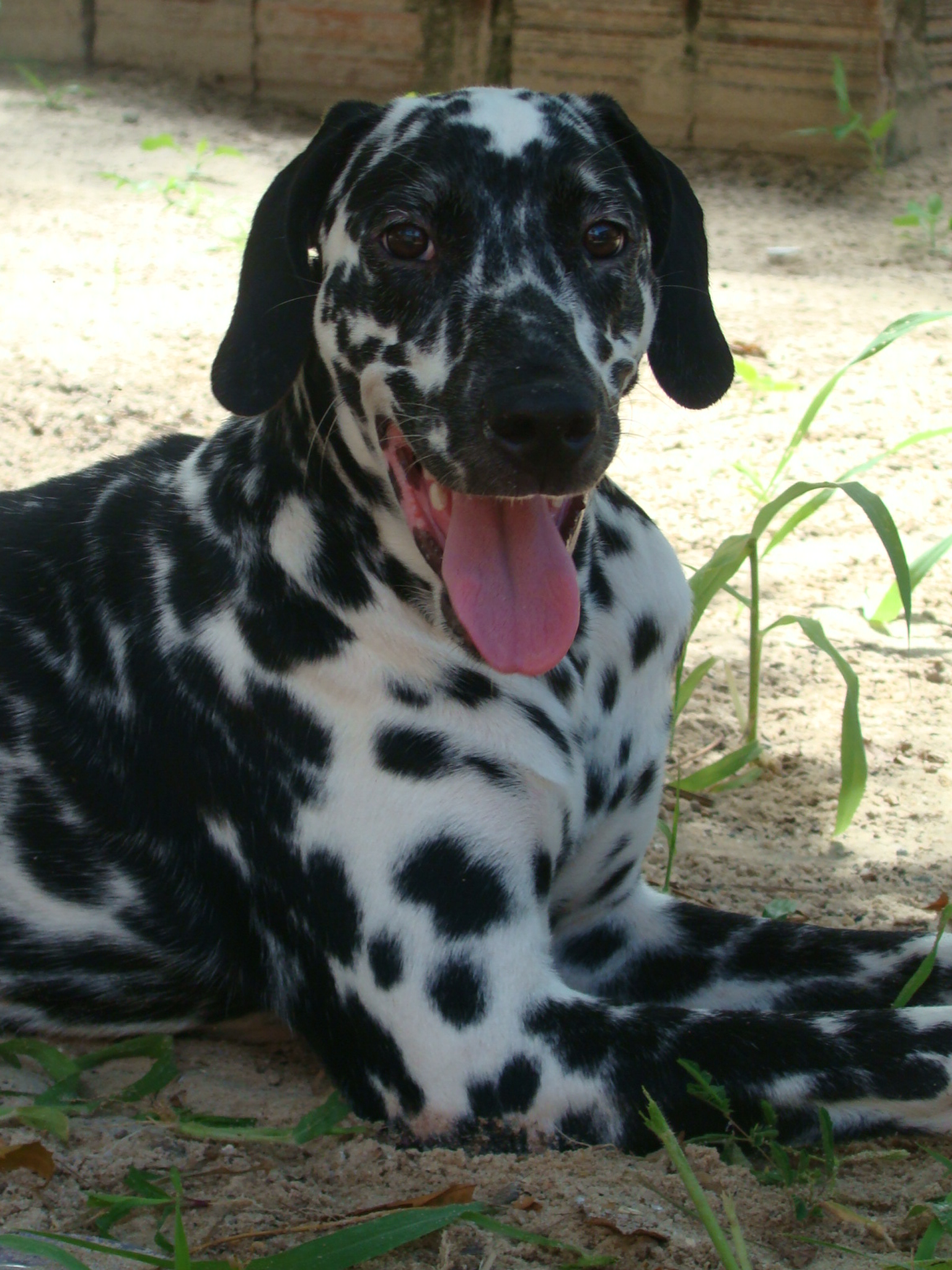
The Dalmatian is one of the most recognizable dogs on the planet, and it’s not just because of the spots. Underneath that eye-catching black-and-white (or liver-and-white) coat is an athletic, muscular dog built for endurance, with a smooth, effortless trot that hints at its coach-dog past.
They’re medium to large dogs, with a desirable height at the withers between 19 and 23 inches, and any dog over 24 inches is disqualified from the show ring. Adult Dalmatians typically weigh 45 to 70 pounds, and true to the breed’s working roots, a Dalmatian is capable of great endurance combined with a fair amount of speed.
Funny enough, that famous coat isn’t there from day one. Dalmatians are actually born solid white, and the colored spots don’t appear until roughly two weeks of age, continuing to develop until the dog is over a year old. It’s one of the little surprises that makes new Dalmatian owners smile the first time they meet a litter.
The Dalmatian’s backstory is genuinely mysterious, and even experts can’t fully agree on it. Their exact ancestry is fiercely debated among historians, and while their name suggests a connection to Dalmatia, a region in modern-day Croatia, their actual roots remain uncertain. Some evidence of spotted dogs goes back thousands of years, long before the breed had a name.
What we do know is how the Dalmatian earned its keep in more recent centuries. In 17th century England, Dalmatians worked as carriage dogs, and their speed, protective nature, and coaching instincts were invaluable when tasked with accompanying carriages and horseback riders. That natural bond with horses later carried over into a much more famous job. Dalmatians put that same skill set to good use as firehouse dogs, running alongside horse-drawn fire engines and helping them maneuver through busy city streets.
The breed’s official recognition followed not long after. Dalmatians received AKC recognition in 1888, and today they sit in the AKC’s Non-Sporting Group alongside breeds as different as the Chow Chow, French Bulldog, and Keeshond. Their fame exploded again in the 20th century thanks to pop culture. The Dalmatian really entered the American consciousness with the 1985 re-release of Walt Disney’s 1960s-era classic 101 Dalmatians, which led to a huge spike in popularity for the breed.
Dalmatians are famous for being outgoing, loyal, and full of personality, but they definitely have an independent streak. Their expression is alert and intelligent, indicating a stable and outgoing temperament, and they tend to be loyal and affectionate with their families, and friendly with other pets.
That said, they aren’t the type to greet every stranger like a long-lost friend. They can be aloof with strangers, and male Dalmatians sometimes display territorial aggression toward each other, though proper socialization can help with these behaviors. Early, consistent training and plenty of exposure to new people and situations really pay off with this breed.
Energy is the other big part of the Dalmatian personality. They’re an excellent breed for families that can provide frequent exercise and an active lifestyle, and without adequate exercise, Dalmatians may become hyper or turn to destructive behaviors. Because of their history as running companions for horses and carriages, they genuinely need a job to do or a serious outlet for all that stamina, whether that’s jogging, hiking, or a good long game of fetch every single day.
Did you notice something that could be improved? Something wrong, or something you'd like to share, comment on, add, or remove? We'd really appreciate your help. Got general feedback or a complaint instead of a specific edit? Use our Contact Us page.
Log in to suggest an editSources: AKC Official Standard of the Dalmatian - https://images.akc.org/pdf/breeds/standards/Dalmatian.pdf · Wisdom Panel - Dalmatian Facts - https://www.wisdompanel.com/en-us/dog-breeds/dalmatian · PetHelpful - The Complete Guide to Dalmatians - https://pethelpful.com/dogs/dalmatian-guide · The Farmer's Dog - The Dalmatian Guide - https://www.thefarmersdog.com/digest/dalmatian-guide-history-personality-care/ · dogweightcalculator.com - Dalmatian Weight Chart - https://dogweightcalculator.com/breeds/dalmatian/ · Dalmatian Club of America Foundation - Dalmatian Health - https://dcaf.org/dalmatian-health/ · AKC - Dalmatian History: From Carriage Dogs to Firehouse Mascots - https://www.akc.org/expert-advice/dog-breeds/dalmatian-history/ · AKC - What Makes Dalmatian Spots? - https://www.akc.org/expert-advice/dog-breeding/what-makes-dalmatian-spots/ · AKC - Is the Dalmatian the Right Breed for Your Lifestyle? - https://www.akc.org/expert-advice/dog-breeds/dalmatian-right-for-you/ · AKC - Non-Sporting Group - https://www.akc.org/dog-breeds/non-sporting/ · AKC - Dalmatian Dog Breed Information - https://www.akc.org/dog-breeds/dalmatian/