
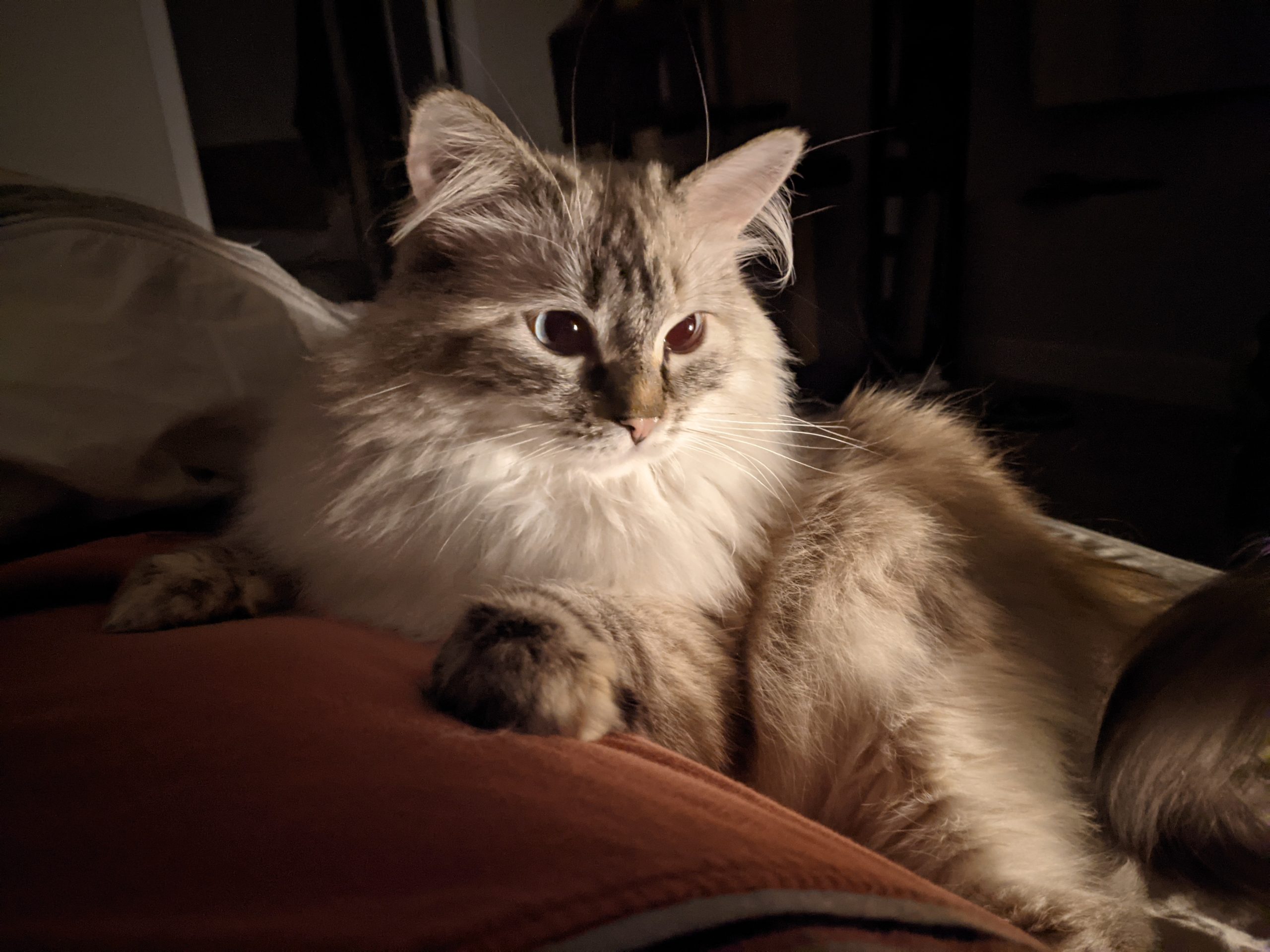
The Ragdoll is one of the most beloved cat breeds in the world, and it is easy to see why. This is a big, sturdy cat with a plush semi-long coat and gorgeous blue eyes that seem to look right into your soul. Despite their size, Ragdolls are famous for being gentle giants with a laid-back, easygoing personality that fits into almost any home.
One of the most charming things about this breed is right there in the name. Ragdolls earned their title because of their habit of going limp and relaxed when you pick them up, just like a child’s floppy toy. They also carry the colorpoint gene, meaning their body is always lighter than their ears, face, legs, and tail, giving them that classic Siamese-like look with a lot more fluff.
Ragdolls are also famous for taking their sweet time growing up. It can take up to four years for one of these cats to reach full size, so that adorable kitten you bring home will keep filling out and getting more impressive for years to come.
The Ragdoll’s story starts in Riverside, California, in the 1960s, when a breeder named Ann Baker began developing the breed from a group of domestic longhaired cats. A white, free-roaming female named Josephine is often credited as the foundational cat behind the breed, and her calm, docile nature became the hallmark trait Baker bred for.
Baker ran her early breeding program under strict, unusual rules and trademarked the Ragdoll name, which eventually pushed a group of breeders to break away in the 1970s. Led by Denny and Laura Dayton, this group worked to bring the cats into the mainstream cat fancy, developing the breed standard that is still used by major registries today. Another splinter group later created a related but separate breed called the Ragamuffin.
Recognition came gradually. The Cat Fanciers’ Association first accepted Ragdolls into its registration books in 1993 and granted them full championship status in 2000. Today the Ragdoll is recognized by essentially every major registry, including CFA, TICA, and FIFe, and has become one of the most popular pedigreed cats in both the United States and the United Kingdom.
If you want a cat that acts a little like a dog, the Ragdoll might be your perfect match. These cats genuinely love being near their people, often following owners from room to room and greeting them at the door. They are known as puppy cats for good reason, since many can even be taught to play fetch.
Ragdolls are calm, quiet, and rarely demanding, which makes them wonderful companions for families with kids, seniors, and even other pets like dogs. They tend to prefer hanging out on the floor or other low spots in the house rather than climbing to the top of the cat tree, so you will often find them sprawled out right where the action is.
Don’t mistake their chill attitude for laziness, though. Ragdoll kittens and young adults can be quite playful and silly, and most cats in this breed keep a soft spot for toys and interactive games well into their senior years. Because they are so food and cuddle motivated rather than high energy, owners do need to make sure they get enough daily play to avoid packing on extra pounds.
Did you notice something that could be improved? Something wrong, or something you'd like to share, comment on, add, or remove? We'd really appreciate your help. Got general feedback or a complaint instead of a specific edit? Use our Contact Us page.
Log in to suggest an editSources: Cat Fanciers' Association - https://cfa.org/breed/ragdoll/ · TICA - The International Cat Association - https://tica.org/breed/ragdoll/ · Wikipedia - Ragdoll - https://en.wikipedia.org/wiki/Ragdoll · VCA Animal Hospitals - https://vcahospitals.com/know-your-pet/cat-breeds/ragdoll · Trupanion - Ragdoll Cat: History, Breed Description & Care Tips - https://www.trupanion.com/pet-blog/article/ragdoll · Hill's Pet - Ragdoll Cat Breed - https://www.hillspet.com/cat-care/cat-breeds/ragdoll · Dimensions.com - Ragdoll Cat Dimensions & Drawings - https://www.dimensions.com/element/ragdoll-cat · Cats.com - Ragdoll Cat Breed - https://cats.com/cat-breeds/ragdoll