
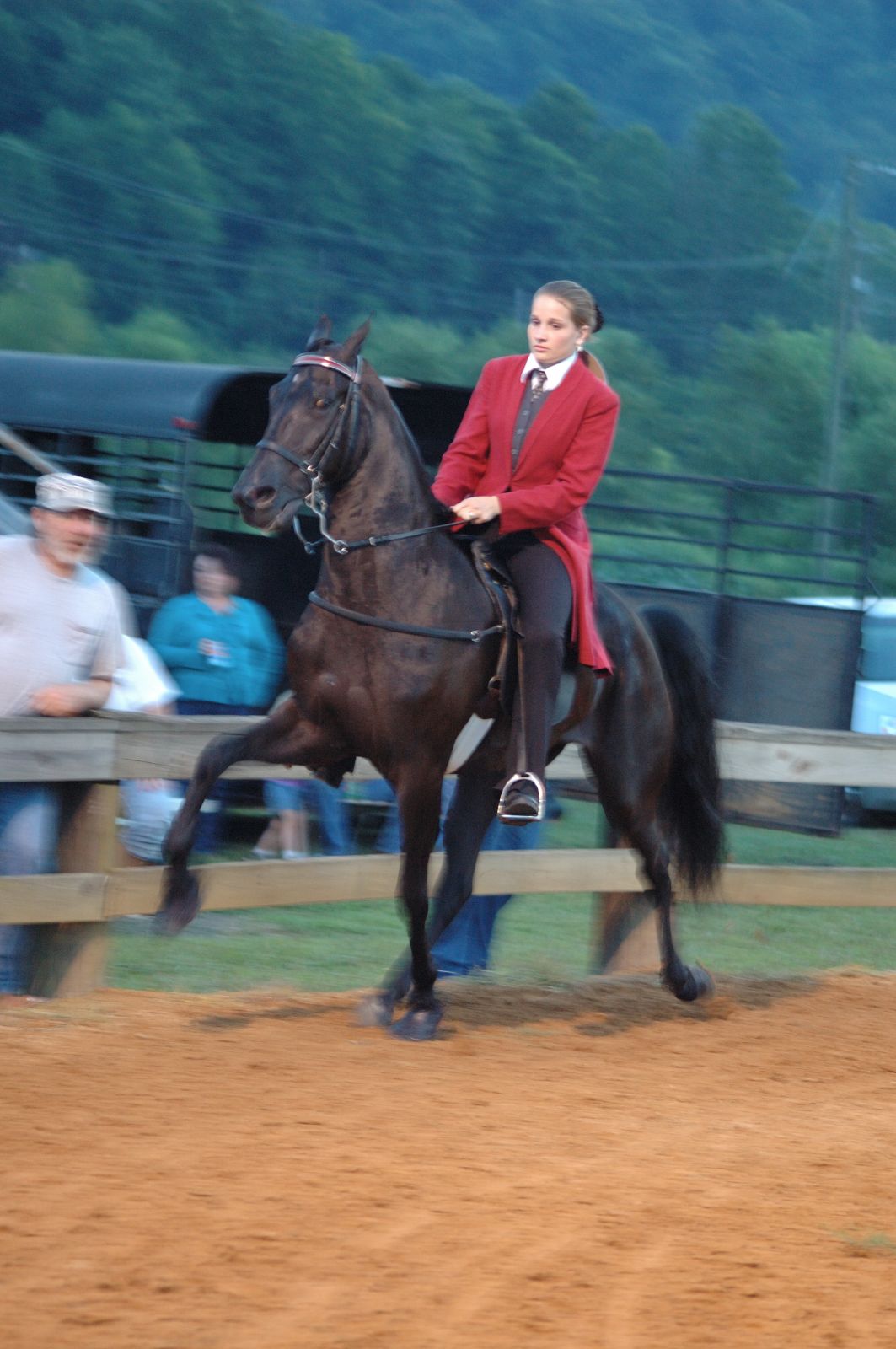

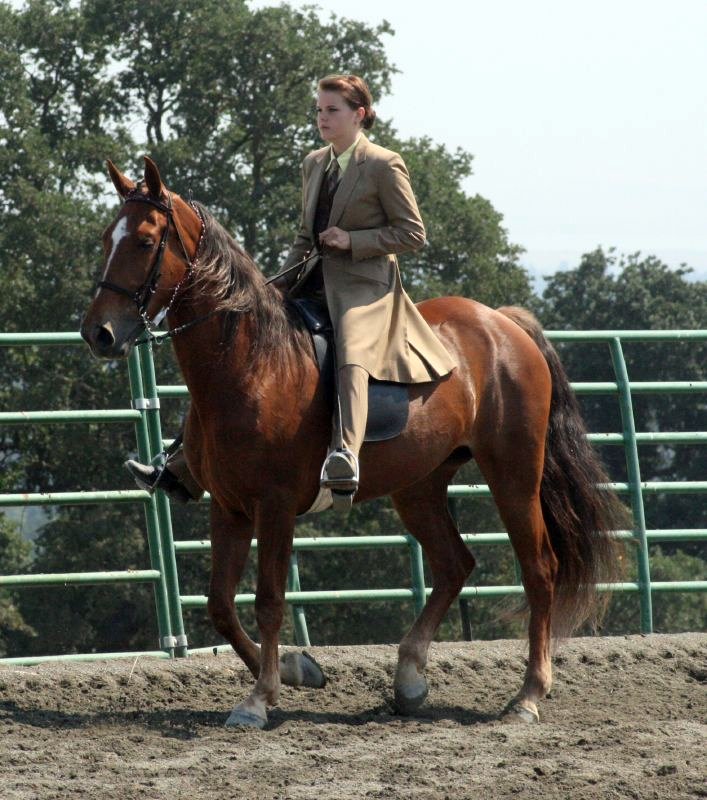
The Tennessee Walking Horse is easy to spot the moment it moves. Instead of a regular walk, trot, and canter, this breed offers a signature four-beat running walk that feels almost like gliding rather than riding. That gait comes naturally: it’s inherited and cannot be taught to a horse who doesn’t already have it in its genes.
Physically, these are tall, elegant horses with a long, graceful neck, small well-placed ears, and sloping shoulders and hips that give them their smooth, ground-covering stride. They come in just about every color and pattern you can imagine, from bay and black to palomino, roan, and flashy pintos, which only adds to their appeal both on the trail and in the show ring.
Beyond the famous gait, what really wins people over is the horse’s personality. Owners and breed groups consistently describe Tennessee Walkers as calm, gentle, and easygoing, which is a big part of why they’ve become one of America’s most popular pleasure and trail breeds.
The breed’s story starts in the Middle Basin of Tennessee, where farmers in the late 1700s and 1800s wanted a horse that could handle long days working the land but still be comfortable to ride afterward. They crossed Narragansett and Canadian Pacers with Standardbreds, Morgans, Thoroughbreds, and American Saddlebreds, and later added gaited Spanish Mustang bloodlines, gradually shaping a horse built for both stamina and comfort.
The rich, mineral-heavy limestone soil and bluegrass pastures of the region are often credited with helping produce especially hardy, sound horses, and those traits carried through the breed as it spread. Early on, the horse was actually known as the Tennessee Pacer before its identity as a distinct walking breed took hold.
Formal organization came in 1935 with the founding of the Tennessee Walking Horse Breeders’ and Exhibitors’ Association, which still manages the breed registry today. The USDA officially recognized the breed in the 1950s, the studbook closed soon after so only horses with documented Walking Horse parentage could be registered, and in 2000 the breed was named the official state horse of Tennessee.
Tennessee Walkers have earned a reputation as one of the most laid-back, rider-friendly breeds out there. They tend to be affectionate, gentle, and intelligent, which makes them a favorite for riders who want a mount that won’t spook easily or get rattled on a busy trail.
That steady nerve pairs beautifully with their smooth gaits. Because the running walk and flat-footed walk are so comfortable, these horses are famous for giving riders a long, easy ride even over many miles, which is exactly what they were originally bred for on Southern farms and plantations.
Today you’ll find Tennessee Walkers doing everything from relaxed trail riding to dressage, pleasure driving, and light farm work, largely because their calm, adaptable nature lets them settle into so many different jobs. It’s worth knowing that some show-ring training practices involving artificial gait enhancement, known as soring, have drawn serious controversy and led to federal regulation, so reputable breeders and organizations actively work to promote humane training methods instead.
Did you notice something that could be improved? Something wrong, or something you'd like to share, comment on, add, or remove? We'd really appreciate your help. Got general feedback or a complaint instead of a specific edit? Use our Contact Us page.
Log in to suggest an editSources: Wikipedia - https://en.wikipedia.org/wiki/Tennessee_Walking_Horse · TWHBEA - The Breed - https://twhbea.com/the-breed/ · Oklahoma State University Breeds of Livestock - https://breeds.okstate.edu/horses/tennessee-walking-horses · Horse Illustrated - https://www.horseillustrated.com/tennessee-walking-horse/ · Mad Barn - Tennessee Walking Horse Breed Guide - https://madbarn.com/tennessee-walking-horse-breed-profile/ · Art by Crane - Tennessee Walking Horse - https://www.artbycrane.com/horse_breeds/light_horse_breeds/tennessee_walking_horse.html · Conley and Koontz Equine Hospital - https://www.ckequinehospital.com/services/equine/breeds/tennessee-walking-horse · A-Z Animals - Tennessee Walking Horse Animal Facts - https://a-z-animals.com/animals/tennessee-walker-horse/